Weather Alert in Montana
Avalanche Warning issued February 24 at 6:14AM MST by NWS Missoula MT
AREAS AFFECTED: Kootenai/Cabinet Region; West Glacier Region
DESCRIPTION: AVWMSO The following message is transmitted at the request of Flathead Avalanche Center Hungry Horse MT. ...AVALANCHE WARNING ISSUED BY THE FLATHEAD AVALANCHE CENTER... 06:00 MST Tue Feb 24 2026 The Flathead Avalanche Center in Hungry Horse has issued a BACKCOUNTRY AVALANCHE WARNING for the following areas: NWS Missoula MT - MTZ001 (MTZ001)...MTZ002 (MTZ002) * WHAT...New and wind-drifted snow have created very dangerous avalanche conditions. * WHERE...Slopes above 5000 feet in the Flathead Range and the Lake McDonald and Marias Pass areas of Glacier National Park. Slopes above 6500 feet in the Swan and Whitefish Ranges. * WHEN...In effect from Tue 06:00 MST to Wed 06:00 MST. * IMPACTS...Natural and human-triggered avalanches are very likely. Avalanches will release on weak layers buried two to four feet deep. These will run long distances, travel into low-angle terrain, and can cover snowmobile and snowshoeing trails and backcountry ski routes. Avalanches may connect across terrain features like ridges, releasing multiple start zones at once. Avalanches can be triggered from long distances away. Smaller slopes, such as roadcuts, may also avalanche, depositing a surprising amount of debris on roads below. * PRECAUTIONARY / PREPAREDNESS ACTIONS...Very dangerous avalanche conditions. Pay close attention to the terrain around you. Avoid traveling on and under steep slopes. Consult http://www.flatheadavalanche.org/ or www.avalanche.org for more detailed information. Similar avalanche danger may exist at locations outside the coverage area of this or any avalanche center.
INSTRUCTION: N/A
Want more detail? Get the Complete 7 Day and Night Detailed Forecast!
Current U.S. National Radar--Current
The Current National Weather Radar is shown below with a UTC Time (subtract 5 hours from UTC to get Eastern Time).

National Weather Forecast--Current
The Current National Weather Forecast and National Weather Map are shown below.

National Weather Forecast for Tomorrow
Tomorrow National Weather Forecast and Tomorrow National Weather Map are show below.

North America Water Vapor (Moisture)
This map shows recent moisture content over North America. Bright and colored areas show high moisture (ie, clouds); brown indicates very little moisture present; black indicates no moisture.

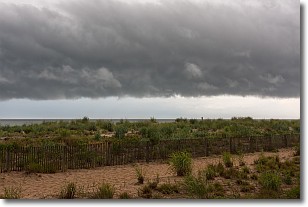
Weather Topic: What are Shelf Clouds?
Home - Education - Cloud Types - Shelf Clouds
 Next Topic: Sleet
A shelf cloud is similar to a wall cloud, but forms at the front
of a storm cloud, instead of at the rear, where wall clouds form.
A shelf cloud is caused by a series of events set into motion by the advancing
storm; first, cool air settles along the ground where precipitation has just fallen.
As the cool air is brought in, the warmer air is displaced, and rises above it,
because it is less dense. When the warmer air reaches the bottom of the storm cloud,
it begins to cool again, and the resulting condensation is a visible shelf cloud.
Next Topic: Sleet
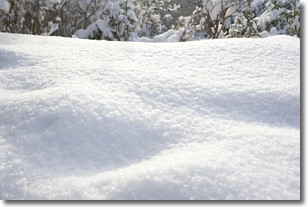
Weather Topic: What is Snow?
Home - Education - Precipitation - Snow
 Next Topic: Stratocumulus Clouds
Snow is precipitation taking the form of ice crystals. Each ice crystal, or snowflake,
has unique characteristics, but all of them grow in a hexagonal structure.
Snowfall can last for sustained periods of time and result in significant buildup
of snow on the ground.
On the earth's surface, snow starts out light and powdery, but as it begins to melt
it tends to become more granular, producing small bits of ice which have the consistency of
sand. After several cycles of melting and freezing, snow can become very dense
and ice-like, commonly known as snow pack.
Next Topic: Stratocumulus Clouds
Current conditions powered by WeatherAPI.com